Beans found 0/6

RHUMB LINE Coffee Roasters

A steady bearing to six farms. Roasted by the harbour.

Chart your coffee

Click anything on the desk to open it.

Prologue · Day 1

Six empty slots, one season

  • 15 March · 05:40 · Sea smoke
  • Wind NW 12 kn · Glass 1024, steady
  • 06:10 · Lines off · Six slots empty

Every season the roaster leaves Merrowick with a wooden sample chest and six empty slots. Green coffee can be ordered from a list, but a list cannot tell you how a farm smells after rain. So we go, holding one bearing at a time, and come home when every slot is full. Pull up a stool.

Orders: six slots, six farms, one season. Cup everything. Bring home only what we would drink ourselves.

Next: Ocean chart

Leg 1 of 6

Day 8 · 22 March

Santo Tomás de Castilla, Guatemala

15°41′N 88°37′W

Course from last port
Merrowick 44°48′N 62°37′W

Wind NE 12 kn · Sea slight · Haze

Ship’s log

Made fast at Santo Tomás at dusk. Two days by road, west and up into the Cuchumatanes. At Finca Viento Seco the last cherries were coming off the top rows. The owner wet a finger and held it up: the warm wind from Mexico, she said, is why frost never reaches them.

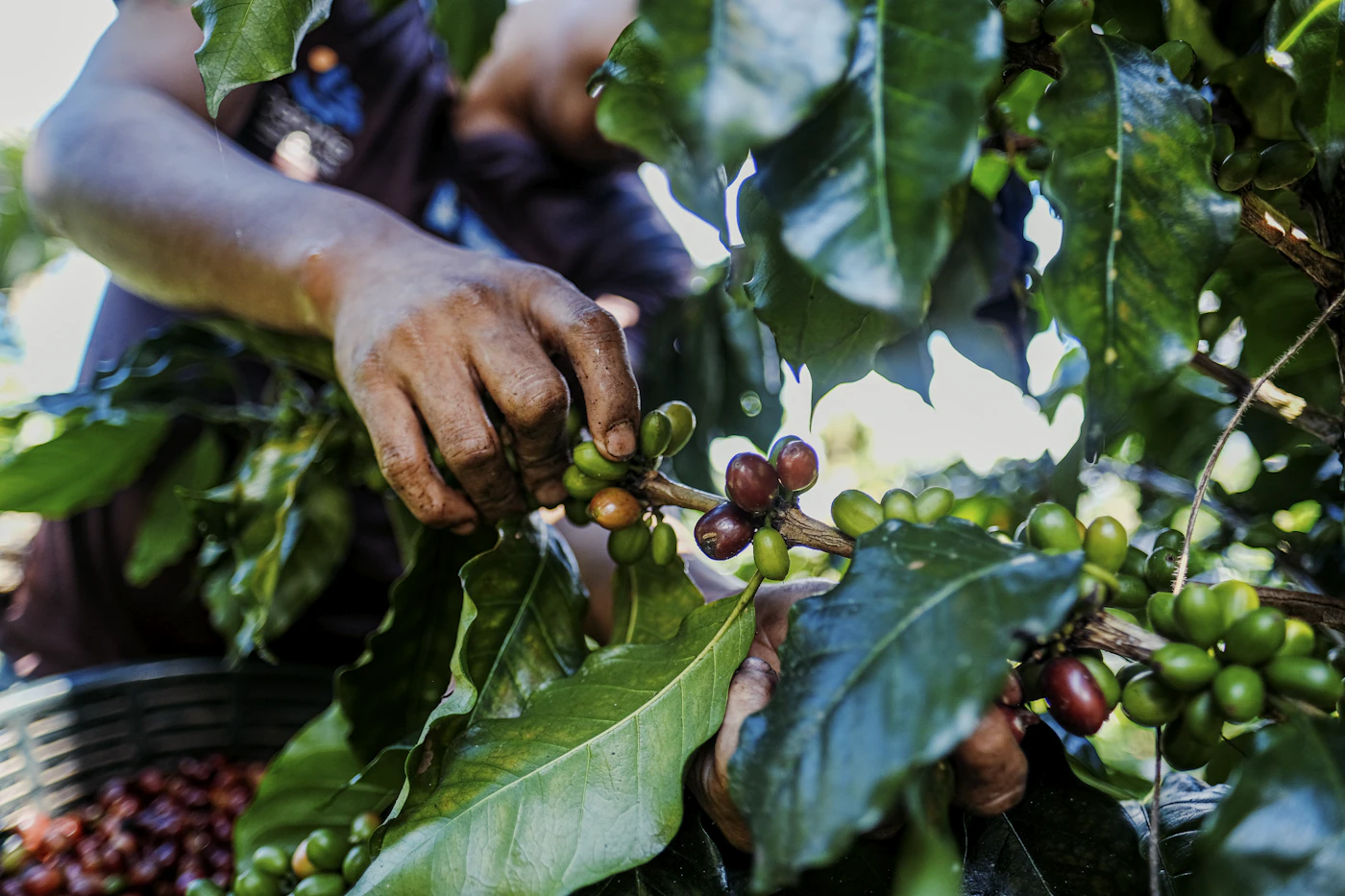
Two hands pull ripe red and green coffee cherries from a branch, a basket of picked cherries below
Hands picking ripe cherries, San Marcos, Guatemala
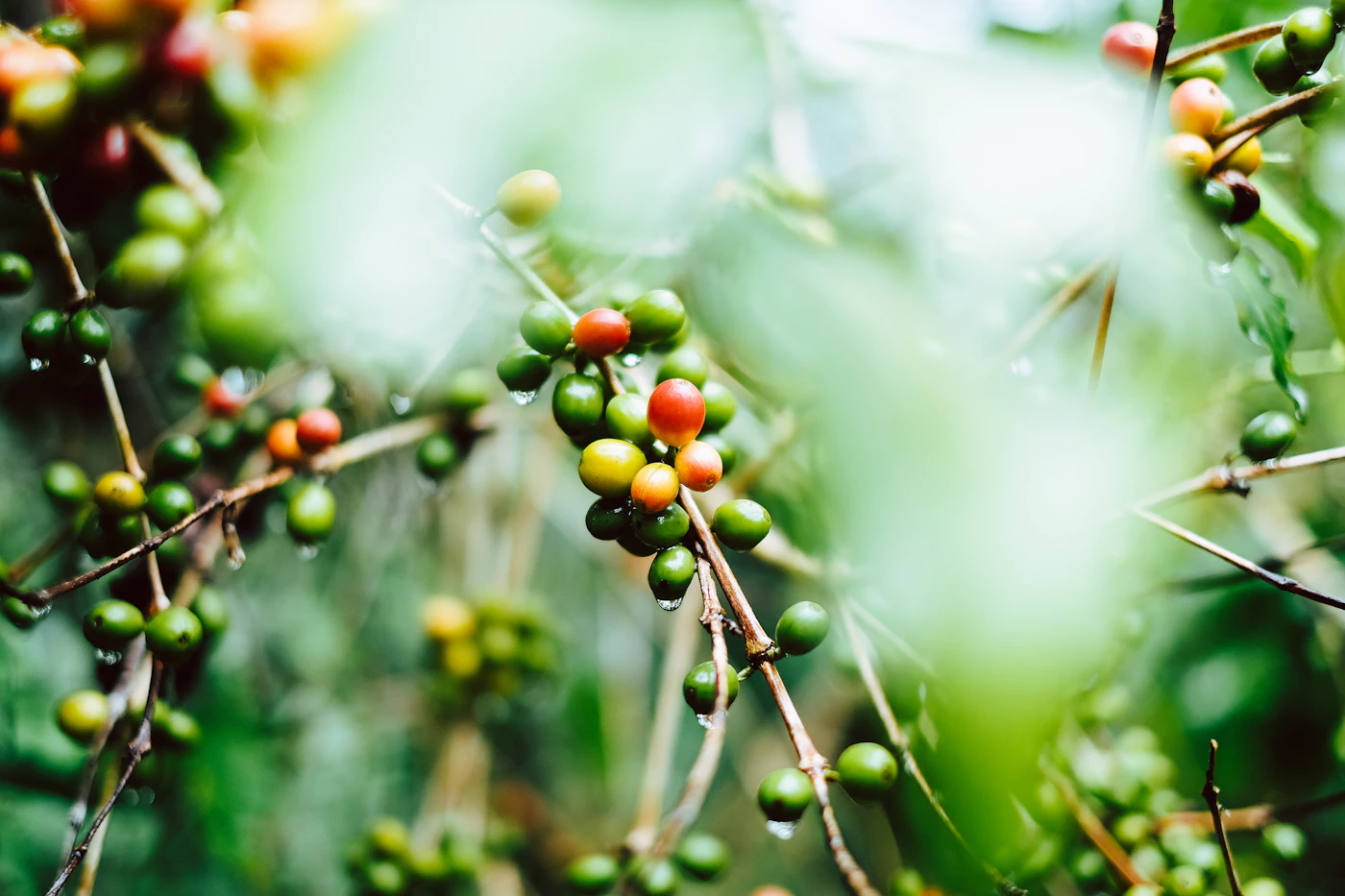
Clusters of green coffee cherries, a few turning red, hang from thin branches beaded with dew
Green cherries with dew, Tajumulco, Guatemala

Found and stowed

Huehuetenango, Guatemala Finca Viento Seco Altitude 1,700–2,000 m Process Washed, patio-dried Variety Bourbon, Caturra, Catuaí In the cup Dark chocolate · Mandarin · Toasted almond Chocolate, Citrus, Nutty

Leg 2 of 6

Day 20 · 3 April

Cartagena, Colombia

10°24′N 75°32′W

Course from last port
Santo Tomás de Castilla, Guatemala 15°41′N 88°37′W

Wind NE 18 kn · Sea moderate

Ship’s log

Anchored off Cartagena in a fresh trade wind. Three days south by road, the last hour in a painted chiva with sacks on the roof. Huila was starting its mitaca, the smaller second picking. El Rumbo means “the course”. We took it as a sign and cupped until dark.

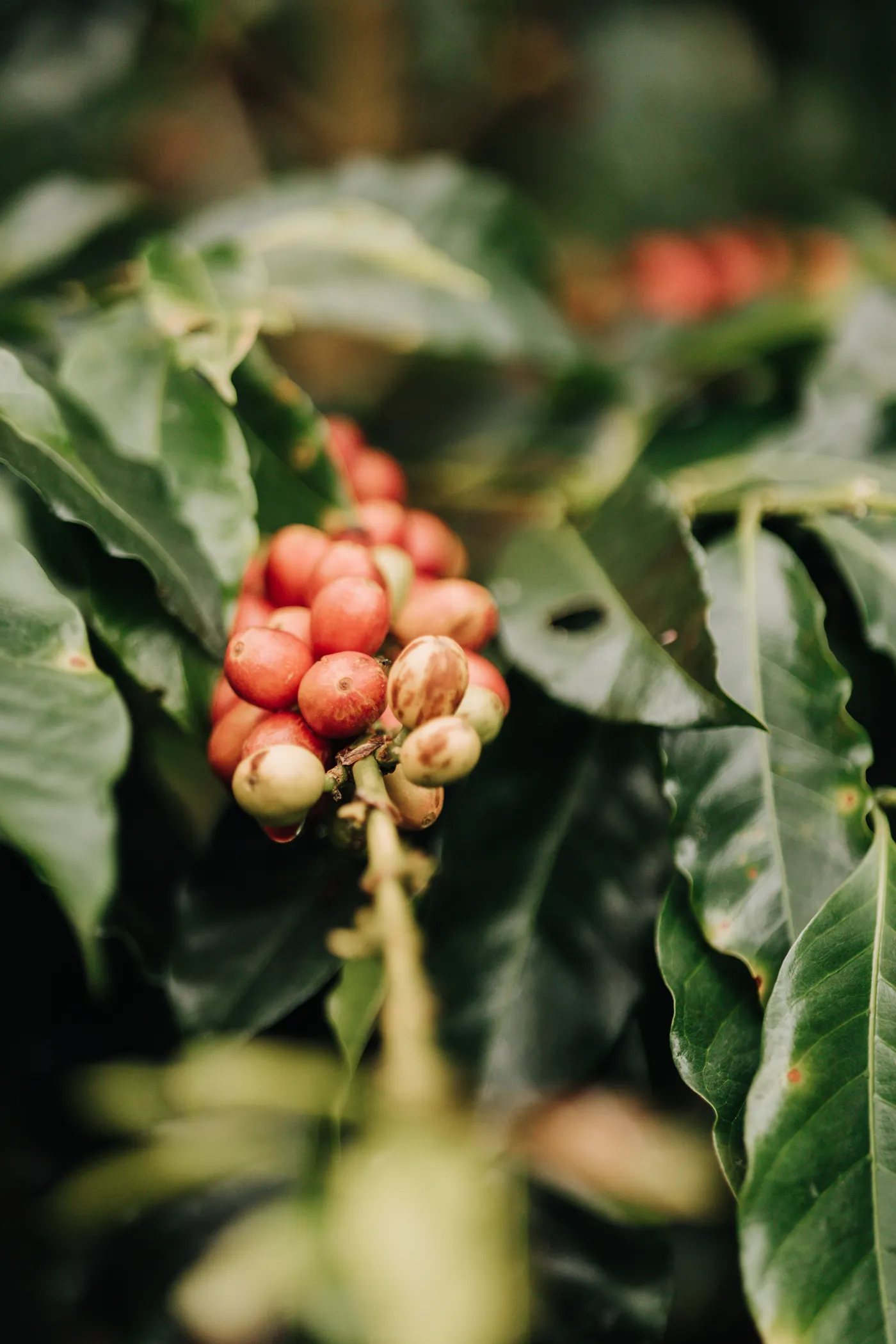
A cluster of red and cream coffee cherries among dark green leaves, close up against a soft background
Ripe cherries on the branch, Huila, Colombia
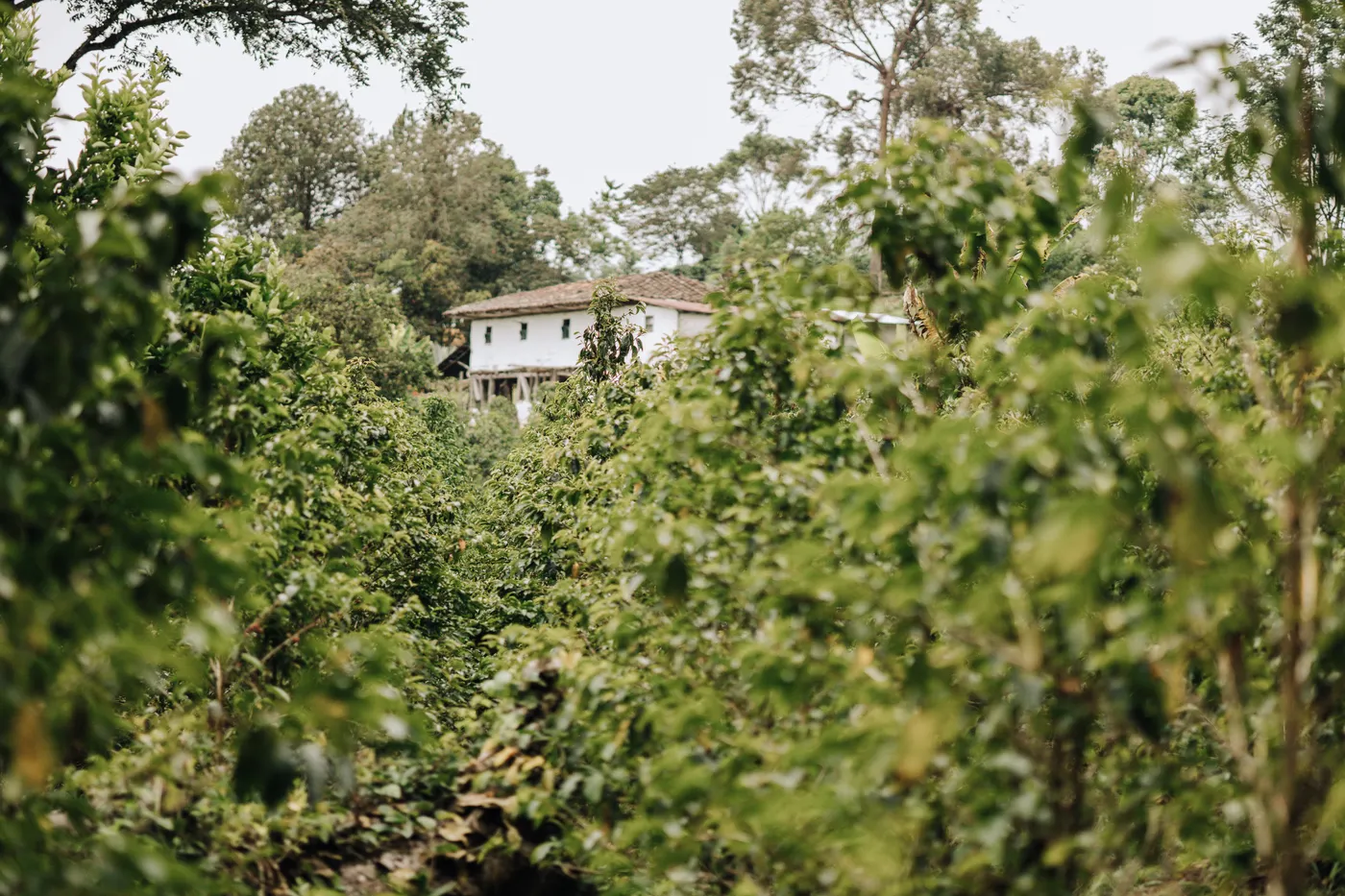
Rows of leafy coffee shrubs lead up to a white farmhouse with a tiled roof among tall trees
Coffee rows below a farmhouse, Huila, Colombia

Found and stowed

Huila, Colombia Finca El Rumbo Altitude 1,600–1,850 m Process Washed Variety Caturra, Castillo In the cup Red cherry · Panela · Cocoa nib Fruity, Sweet, Chocolate

Leg 3 of 6

Day 48 · 1 May

Santos, Brazil

23°59′S 46°18′W

Course from last port
Cartagena, Colombia 10°24′N 75°32′W

Wind SE 8 kn · Sea slight · Low cloud

Ship’s log

Alongside at Santos. The red hills of Mogiana take their name from the old railway that once carried their coffee on its way to this quay. Picking began the morning we reached Fazenda Pedra Clara. By noon the patio was striped with cherries, raked into rows to dry.

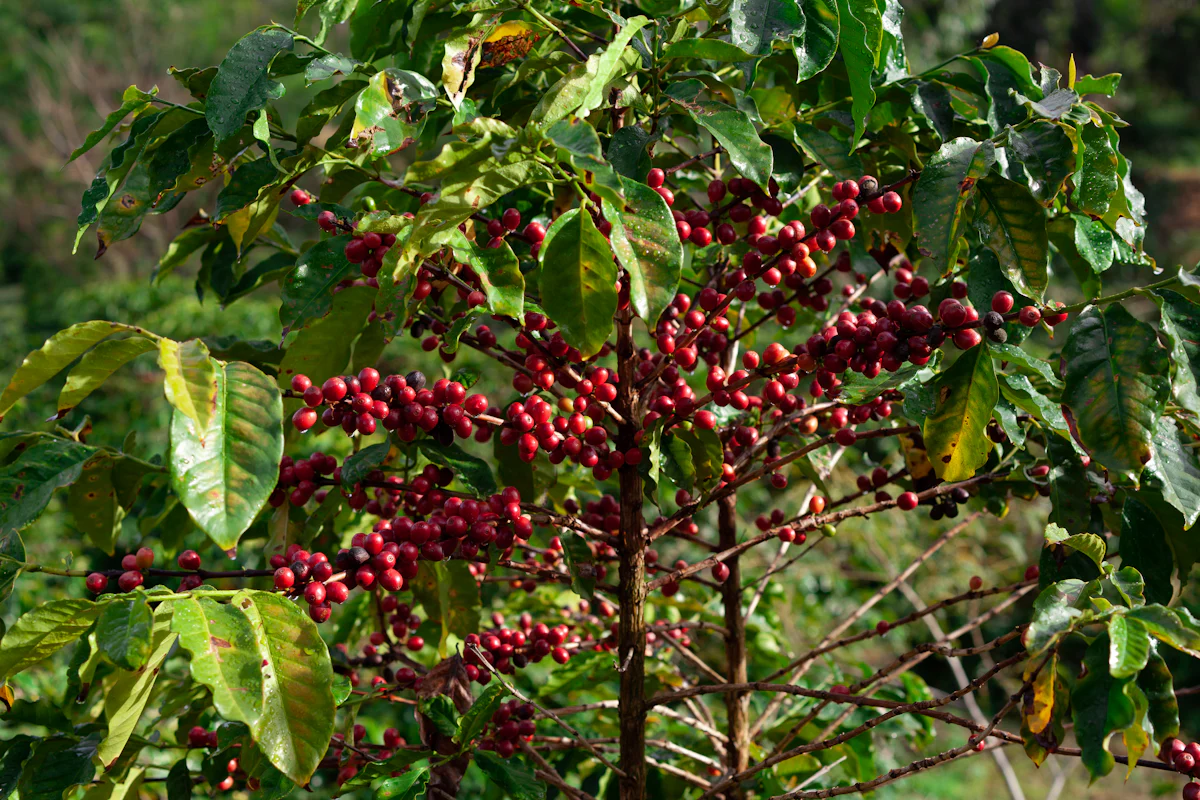
Branches of a coffee tree heavy with ripe red cherries, lit by soft sun against green foliage
Ripe cherries, São Sebastião da Grama, Brazil
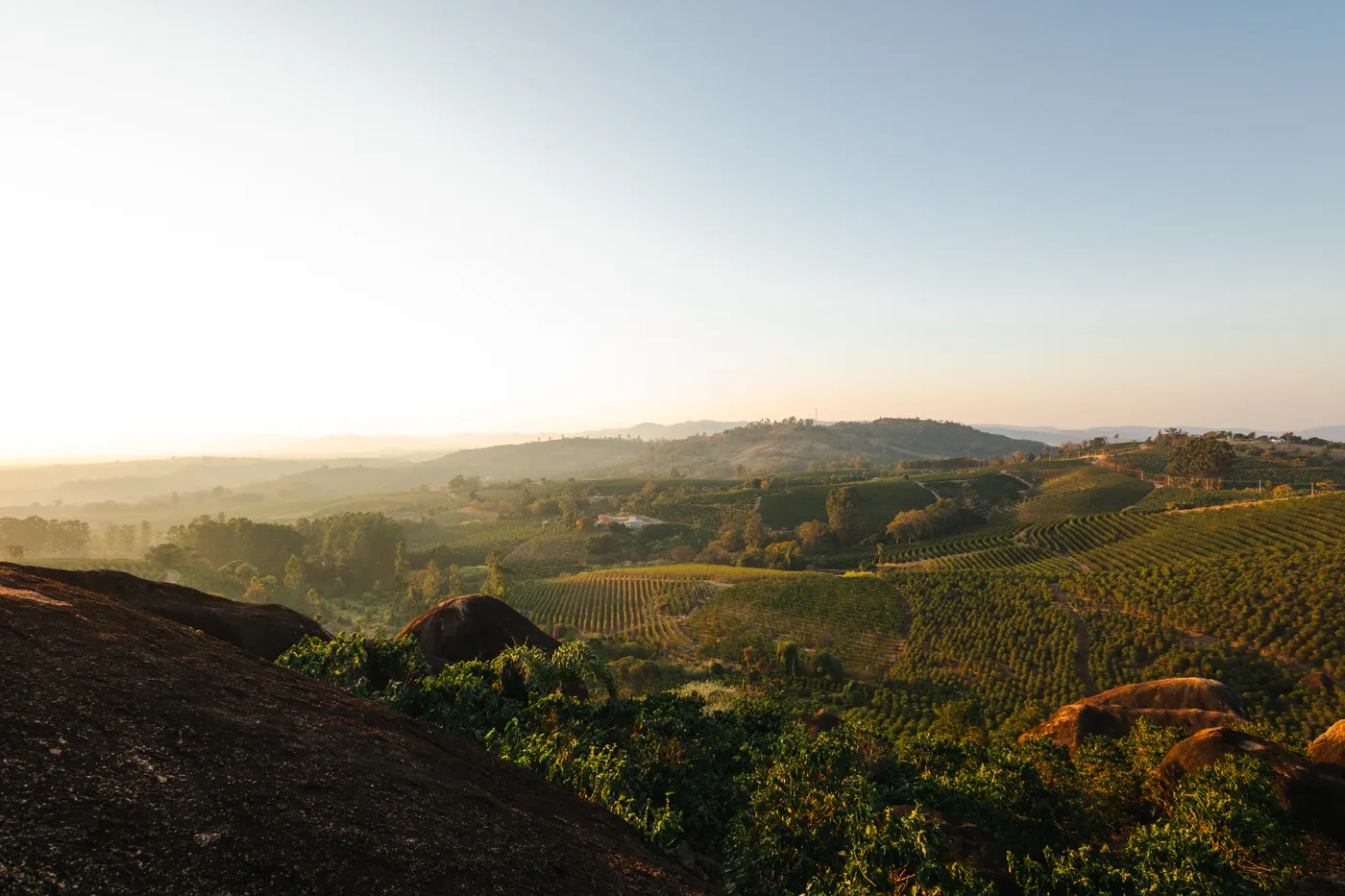
Low sun over rolling hills planted with rows of coffee, dark boulders in the foreground
Coffee hills at sunset, Espírito Santo do Pinhal, Brazil

Found and stowed

Mogiana, Brazil Fazenda Pedra Clara Altitude 950–1,150 m Process Natural Variety Yellow Bourbon, Mundo Novo In the cup Hazelnut · Milk chocolate · Caramel Nutty, Chocolate, Sweet

19 May · Off the Cape. Wind NW 45 kn, seas 7 m. Chest lashed to the table. Half cups only.

Leg 4 of 6

Day 76 · 29 May

Mombasa, Kenya

4°03′S 39°39′E

Course from last port
Santos, Brazil 23°59′S 46°18′W

Wind SSE 17 kn · Sea moderate · Rain

Ship’s log

Mombasa in the long rains. Up-country by train and road to Nyeri, where Mount Kenya showed its peak for an hour at dawn. The early crop was coming in to Gakiriko Factory. At dusk the growers queued with their sacks, and each weight went into a small book.

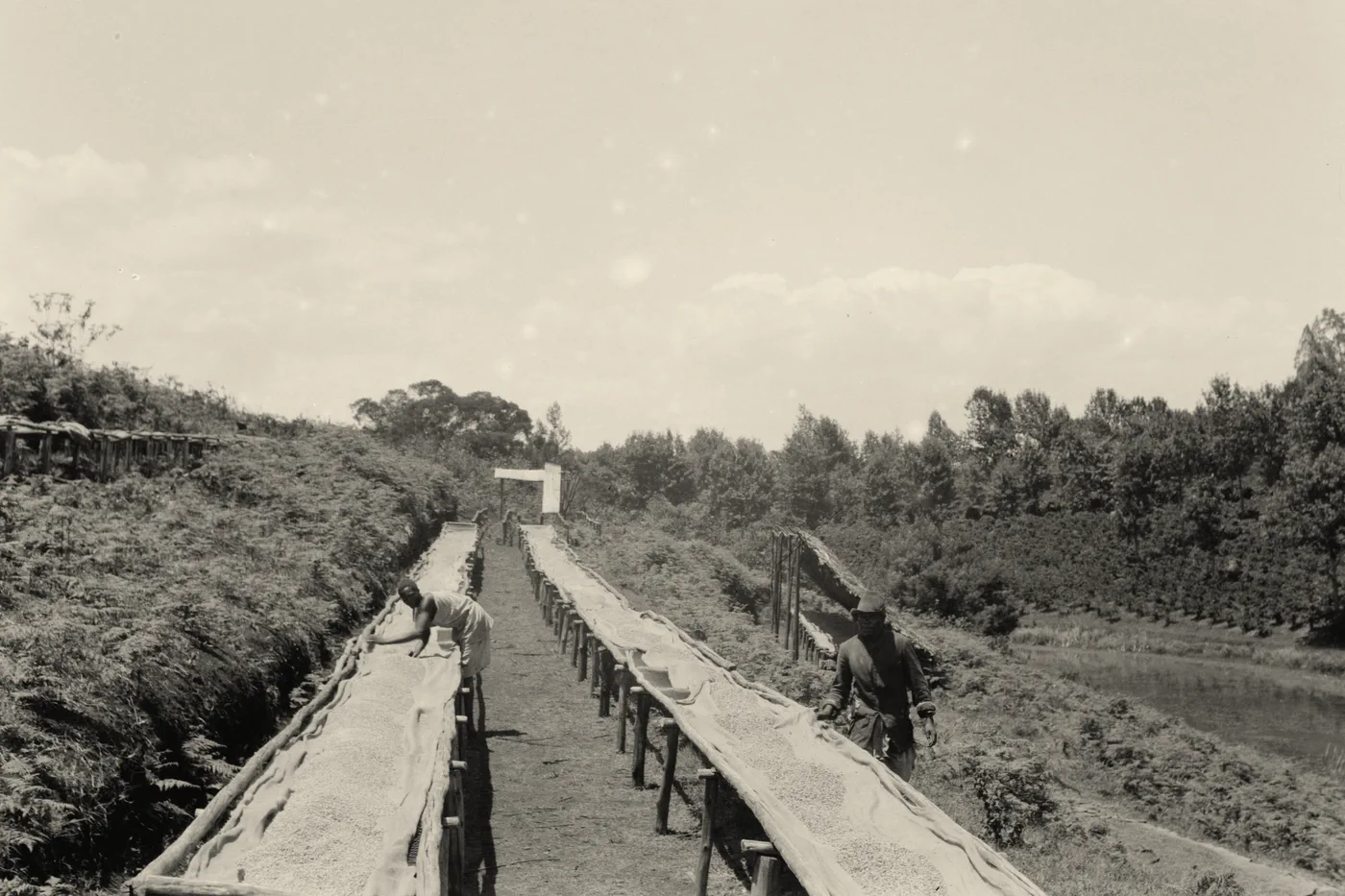
Black-and-white photo of raised drying tables spread with coffee beans, two workers tending them, trees beyond
Raised drying beds on a coffee farm, Kenya, 1936

Found and stowed

Nyeri, Kenya Gakiriko Factory Altitude 1,700–1,900 m Process Double fermented Variety SL28, SL34, Batian In the cup Blackcurrant · Pink grapefruit · Cane sugar Fruity, Citrus, Sweet

Leg 5 of 6

Day 90 · 12 June

Djibouti, Republic of Djibouti

11°36′N 43°08′E

Course from last port
Mombasa, Kenya 4°03′S 39°39′E

Wind W 26 kn · Khamsin · Dust haze

Ship’s log

Djibouti in a hot wind. Train to Dire Dawa, on to Addis, then a day south through false banana gardens. Picking ended in January, but Bokkicho had kept one lot back in parchment. They roasted a handful in a pan over charcoal and passed it round. Jasmine.

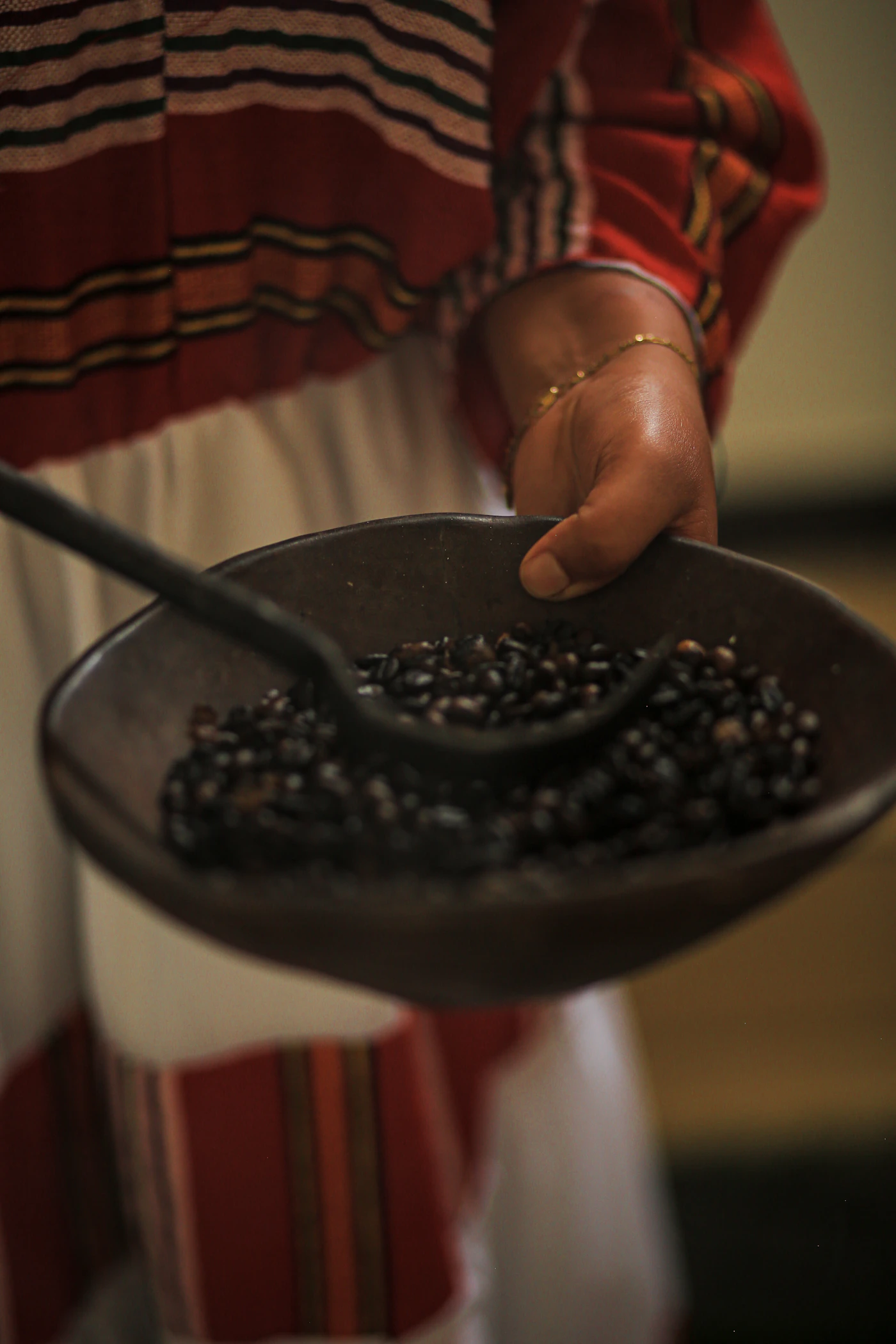
A hand holds a dark pan of freshly roasted coffee beans with a stirring rod, a striped white dress behind
Freshly roasted beans, Shashemene, Ethiopia

Found and stowed

Yirgacheffe, Ethiopia Bokkicho Washing Station Altitude 1,900–2,200 m Process Washed Variety Kurume, Wolisho In the cup Jasmine · Bergamot · White peach Floral, Citrus, Fruity

Indian Ocean, 02:00. Monsoon swell astern, stars between squalls, five slots full.

Leg 6 of 6

Day 112 · 4 July

Belawan, Sumatra, Indonesia

3°47′N 98°41′E

Course from last port
Djibouti, Republic of Djibouti 11°36′N 43°08′E

Wind SW 9 kn · Squall at dawn

Ship’s log

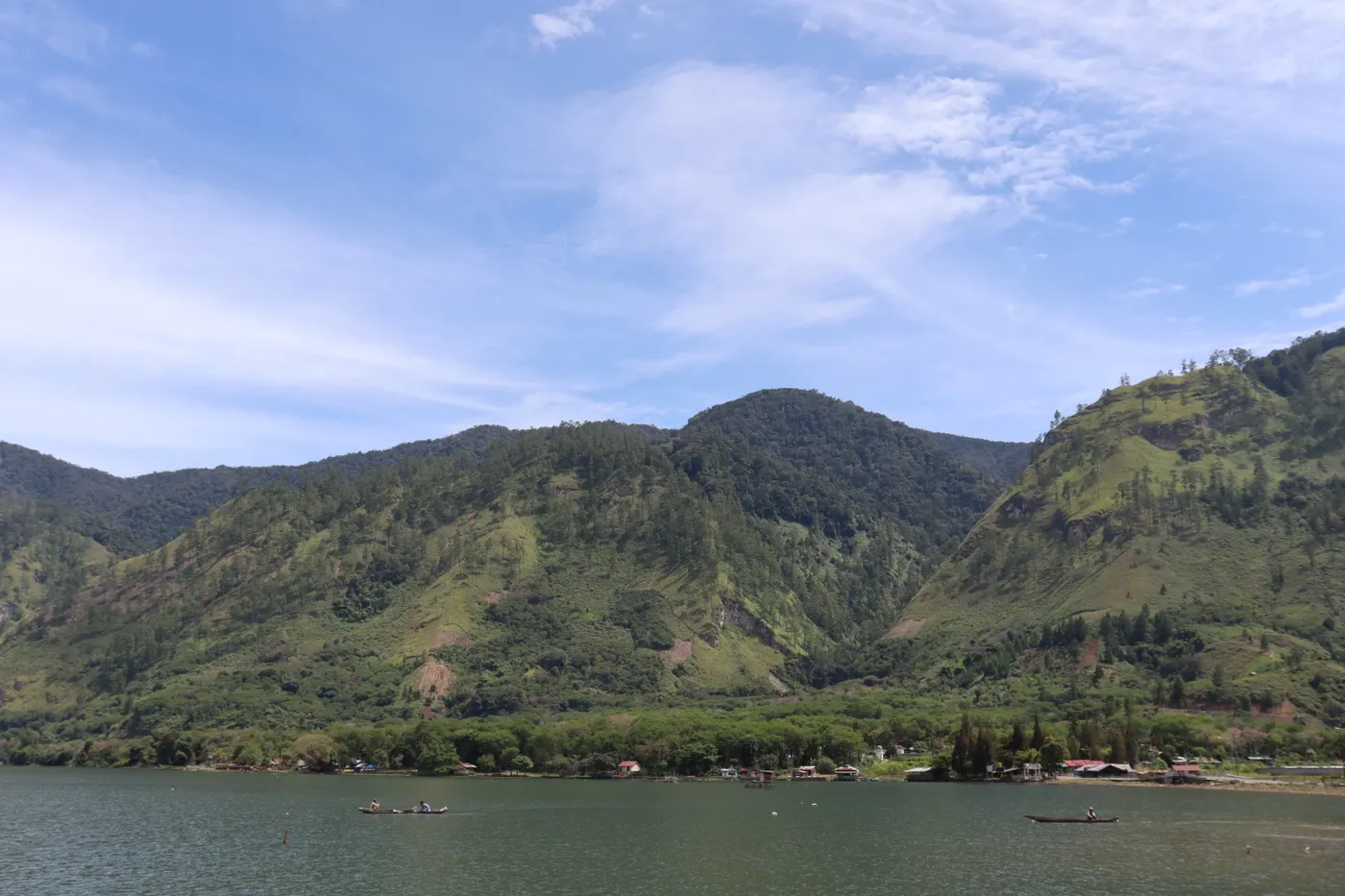
A squall at first light, then Belawan steaming in the sun. A day up the mountain road to Takengon and Lake Laut Tawar, where the fly crop was in. Wet-hulled beans lay on tarpaulins along the lake road, darkening to jade. Kabut Tinggi means “high mist”; by four it came down.

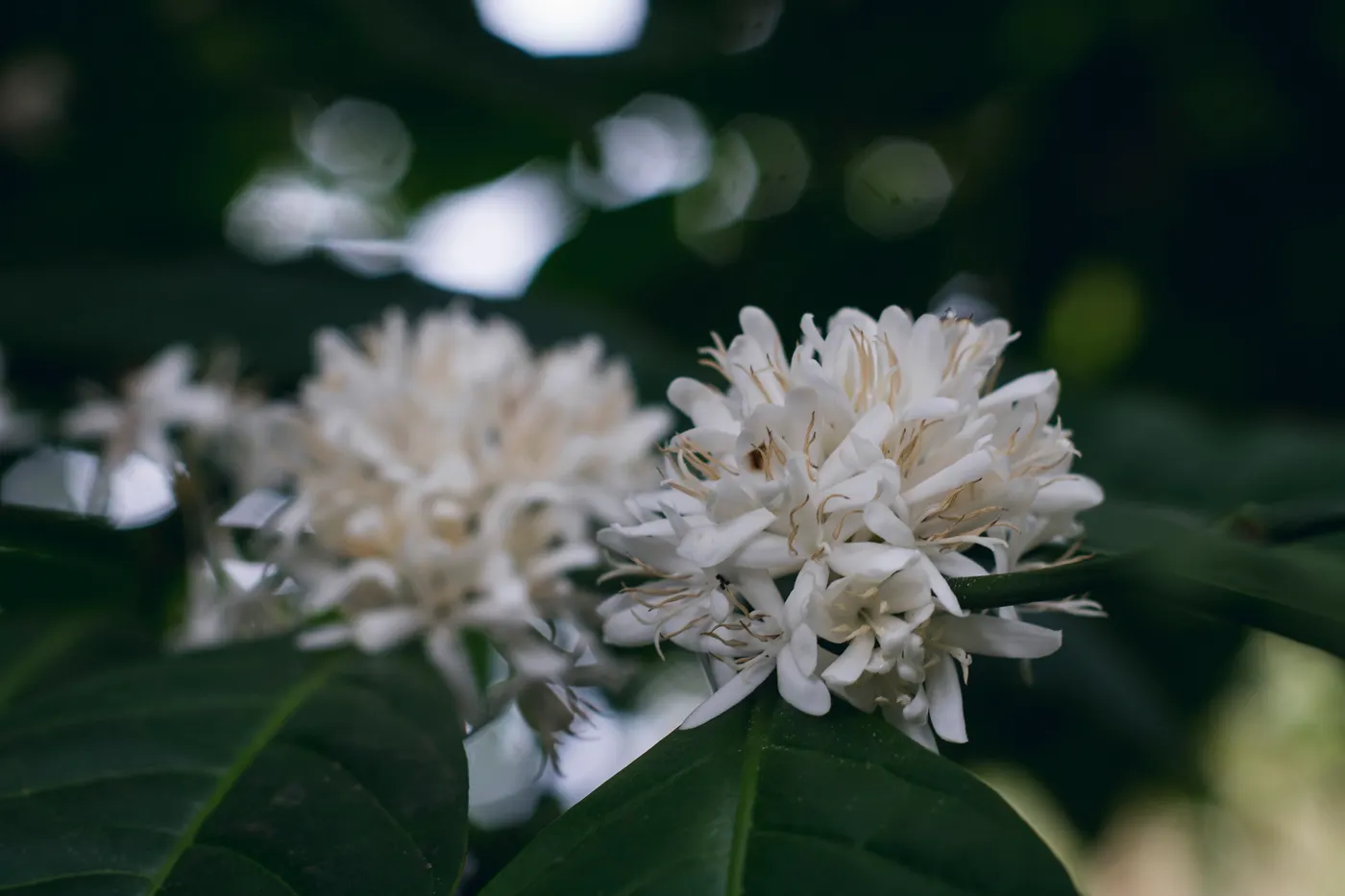
Clusters of white coffee flowers on a branch in close-up, set against dark leaves and soft light
Coffee in flower, Aceh, Indonesia
A lake with small boats below steep green hills and a line of lakeside houses under a blue sky
Lake Laut Tawar, Takengon, Aceh, Indonesia

Found and stowed

Gayo, Sumatra Kabut Tinggi Cooperative Altitude 1,300–1,600 m Process Wet-hulled Variety Tim Tim, Ateng, Gayo 1 In the cup Clove · Pipe tobacco · Molasses Spice, Roasty, Sweet

Homeward by Suez. Six slots full, and the cabin smells of six countries at once.

Next: Sample chest

Landfall · Day 153

Home to Merrowick, every slot full

The sun was going down behind Ropewalk Quay as the lines went ashore. The chest came up the gangway first, before anyone’s kit. Tomorrow we light the roaster, and six farms become six coffees.

Steer by taste Take the quiz

Day 154 · Cupping

Steer by taste

Six coffees on the cupping table. Eight flavour families, laid out like a compass. Turn the wheel until one points north.

Drag to turn, or use the arrow keys.

Floral

Jasmine · Orange blossom · Black tea

Perfumed and delicate. It shows up in high-grown washed coffees and fades fast in a dark roast.

Yirgacheffe, Ethiopia

The eight flavour families
  • Jasmine · Orange blossom · Black tea

    Perfumed and delicate. It shows up in high-grown washed coffees and fades fast in a dark roast.

  • Blackcurrant · Red cherry · Peach

    Juicy and ripe, from bright berries to soft stone fruit. Naturals push it towards jam.

  • Bergamot · Grapefruit · Mandarin

    Crisp acidity that wakes the cup up. It sharpens as the coffee cools.

  • Caramel · Cane sugar · Molasses

    The backbone of a good roast. Sugars brown in the drum and round off the edges.

  • Milk chocolate · Dark chocolate

    Comforting and familiar. It deepens as the roast goes darker and gets along well with milk.

  • Hazelnut · Toasted almond · Pecan

    Toasty and mellow, the kind of cup you can drink every day. Common in Brazilian naturals.

  • Clove · Cinnamon · Black pepper

    Warm and a little woody. Wet-hulled Sumatran coffees carry it, often with a hint of cedar.

  • Pipe tobacco · Malt · Toast

    Deep, toasty and a little smoky. It comes from the drum as much as the farm, so darker roasts show more.

Next: The crew list

The crew list

Join the crew

Four questions about how you brew and what you like. We’ll find your berth: a plan, an origin and the right grind.

Question 1 of 4

How do you brew at home?
What should the cup taste like?
How many cups a week, counting everyone?
Keep one origin, or change course each delivery?

Three ways to sign on. Every bag ships within a day of roasting.

  • Harbour

    1 bag · 250 g · every 2 weeks

    $16

    Home waters for one drinker and a daily cup. Pause any time.

  • Passage

    2 bags · 250 g each · every 2 weeks

    $29

    For a household that brews every morning. Two bags, so the galley never runs dry.

  • Expedition

    3 origins · 250 g each · every month

    $44

    Three origins a month from this season’s chest, cupped side by side. For the curious.

Next: Letter

14 August, 21:10 · Lines doubled, lamp out. End of the season’s log.

Tide tables and new origins

A short letter when a new origin lands, with the month’s tides for Merrowick. Once a month at most.

Merrowick

44°48′N 62°37′W

Shed 4, Ropewalk Quay, off Chandlery Lane

Next: Ship’s log

Galley · Today’s cup

A cup for the watch

The pot on the galley stove is never empty for long. Here is what’s in it today, and how to make the same cup at home.

Gayo, Sumatra, ground medium-fine for the moka pot on the galley stove.

Brewing ashore

  1. Espresso machine

    18 g · 36 g out, water at 93 °C · Fine · 25–30 s

    Judge the shot by weight in the cup. Sour and fast: grind finer. Bitter and slow: grind coarser.

  2. Pour-over or drip

    15 g · 250 g water at 93–96 °C · Medium · about 3 min

    Rinse the paper with hot water, then bloom with 30 g of water for 30–45 s before the main pour.

  3. French press

    30 g · 500 g water at 93–96 °C · Coarse · 4 min

    At four minutes, stir the crust and skim the foam. Press gently and pour it all off at once.

  4. Moka pot

    Basket level, not tamped · Hot water below the valve · Medium-fine · 3–5 min, medium heat

    Lid up. Take it off the heat as the stream turns pale, then cool the base under a cold tap.

Treat every number here as a first bearing. Taste, change one thing at a time, and log what you did.

Next: Ship’s log

Designed & built by Shocking Mike